Training & Qualifications
Make sense of the questions to ask when comparing pilot training pathways.
Explore Training & QualificationsPilotPath / Aviation careers
Look at the whole picture before committing to pilot training.
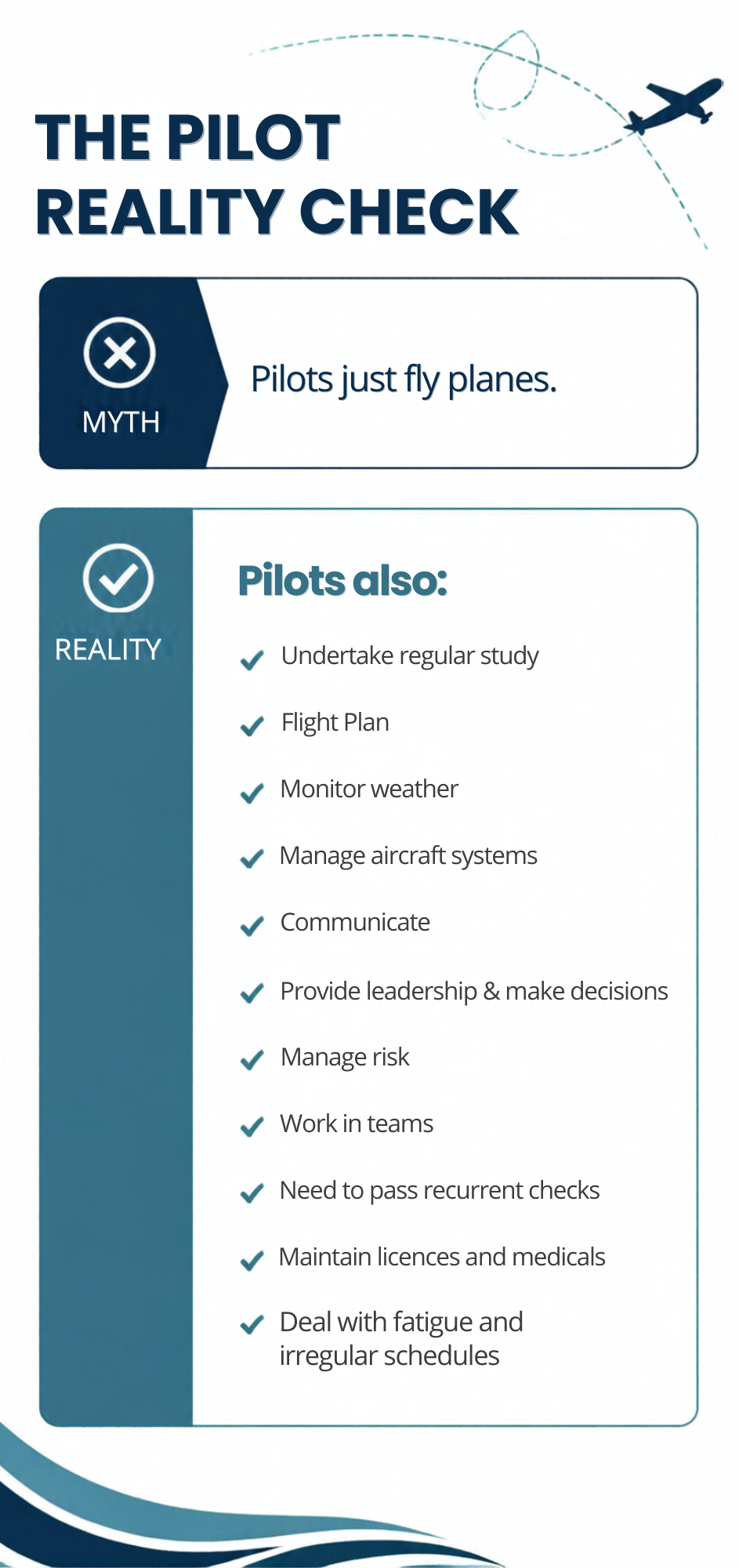
More than just flying an aircraft
For many people, becoming a pilot represents an exciting career involving aircraft, travel and the opportunity to do something different from an ordinary office job.
But professional flying involves much more than controlling an aircraft. Pilots must prepare carefully, understand complex information, communicate effectively, make sound decisions and take responsibility for the safety of their aircraft and everyone on board.
PilotPath is here to help you understand both the opportunities and the realities of the profession before you commit to training.
Before a flight, pilots need to understand the planned route, weather conditions, aircraft performance, fuel requirements and any operational restrictions that may affect the journey.
During a flight, they monitor the aircraft's systems, maintain situational awareness, communicate with air traffic control where applicable, assess changing conditions and make decisions when circumstances require it.
After a flight, there may be further checks, reporting, preparation for the next sector and other operational responsibilities.
The nature of the work varies between airline, charter, instructional and specialist flying, but professionalism, preparation and safety are fundamental to every role.
Learning to fly is a practical skill, but it also requires substantial theoretical knowledge.
Student pilots study subjects such as aviation law, meteorology, navigation, aerodynamics, aircraft systems, performance and human factors. They must apply this knowledge during flight training and demonstrate their competence through examinations and practical assessments.
Learning does not end when a licence is issued. Professional pilots must maintain their knowledge, keep their qualifications current and complete the checks and training required for their operations.
If you enjoy learning, solving problems and applying knowledge in practical situations, this side of aviation can be rewarding. However, it is important to understand that pilot training involves more than simply accumulating flying hours.
Pilots work in an environment where decisions matter. They need to assess risks, follow procedures, recognise the limits of their own abilities and be prepared to delay, change or cancel a flight when necessary.
Communication and teamwork are also essential. In multi-crew operations, pilots must work effectively with other flight crew and coordinate with cabin crew, air traffic services and ground personnel.
Good pilots are not simply confident at the controls. They are disciplined, prepared, willing to learn and able to make considered decisions under pressure.
Pilot working conditions depend on the type of operation, employer, aircraft and route network.
Some pilots work regular local schedules, while others may have early starts, late finishes, overnight duties, weekends away or periods away from home. Airline, charter, regional and specialist flying can each involve different patterns of work.
Fatigue management is an important part of professional aviation. Pilots must take their responsibilities seriously and comply with the operational requirements that apply to their work.
Before choosing this career, think about how the lifestyle could fit with your personal circumstances, family commitments and preferred way of living.
Pilot training requires a significant financial commitment. The total cost depends on the training pathway, flight hours required, aircraft and instructor rates, training organisation and additional expenses.
Completing a qualification is an important achievement, but it does not guarantee immediate employment with an airline or any other particular employer.
Some pilots begin their professional careers in flight instruction, charter operations, regional aviation or other flying roles. Building experience and gaining further qualifications may be important steps towards longer-term career goals.
Recruitment requirements, job availability and career progression vary. It is sensible to investigate a range of possible flying careers rather than assuming that every pilot follows the same route.
Before committing to training, ask yourself:
You do not need to have every answer before you begin researching aviation. The important thing is to understand what is involved and make your decision with realistic expectations.
Use the PilotPath resources to investigate the pathway, compare career options and decide what you need to find out next.
Take the Pilot Fit Check — reflect on your interests, expectations and readiness for pilot training.
Explore Pilot Careers — discover the different types of professional flying.
Understand Training & Qualifications — learn about licences, ratings and training options.
Understand Costs & VSL — investigate the financial commitment and possible funding options.
Read Pilot Stories — hear from people with experience of aviation and flight training.
PilotPath is an information resource. Individual training outcomes, employment opportunities and career progression vary.
Your next step
Make sense of the questions to ask when comparing pilot training pathways.
Explore Training & QualificationsA few questions. A useful next step. Find where to take your curiosity next.
Explore Pilot Fit Check